
Hurricanes Don't Wait.
Talk to our emergency logistics team before the next storm hits.
Get Help.


Every seven or so years, El Niño-Southern Oscillation (ENSO) events can intensify winter seasons and wreak havoc on the environment with icy roads, heavy snowfalls, and blizzards. This puts a strain on business activities, like delaying shipments en route to your warehouse or office. We’ll use our expertise to give the tools you need to prepare your business for the coming winter weather.
Key Takeaways
At Emergency Management Logistics, we believe that when you stay ready, you don’t have to get ready. Learn how to stay ahead of ENSO each year with our winter weather preparedness and recovery tips for your business.
Forming in the Pacific ocean, ENSO brings El Niño to warm up the weather, or La Niña to blow in cold temperatures.
ENSO affects multiple countries’ weather every two to seven years, with La Niña lasting nearly three years at a time. 2026’s forecast shows lingering chilly weather thanks to the La Niña event last fall. You can prepare for the winter before it affects your operations.
Related: 3 Ways to Avoid Shipping Delays in Snowstorms
ENSO causes distinct weather patterns in various parts of the US, which amplifies existing conditions in those areas.
La Niña impacts the winter season in the following states:
If your state gets heavy snowfall or cold droughts in the winters, you can thank La Niña. However, your customers and clients will thank you for having a winter weather preparedness plan in place to keep business afloat.
Contact our emergency logistics experts to get started building your emergency plan.
We believe assessing your winter emergency strategy ahead of time protects your business year-round. Here’s what to include on your checklist to prepare your business for La Niña’s winter.
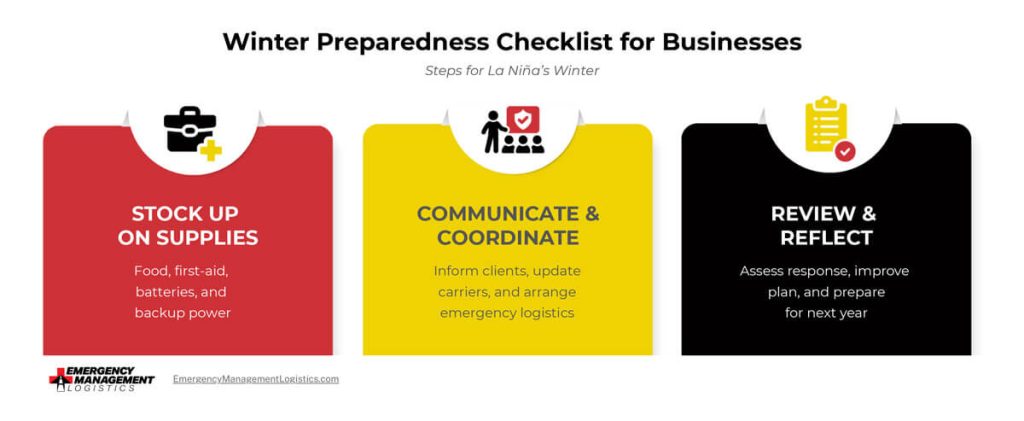
Piling snow, power outages, and road disruptions can leave you or your employees stranded in a dark, cold building. Stock up equipment like flashlights, batteries, food, first-aid kits, and backup generators before a winter storm.
Communication is key when it comes to keeping business running smoothly during an emergency.
Inform your clients of any service delays and give clear next steps on how to proceed during and after the storm. Coordinate with your carriers to keep your transportation on track while keeping an eye on the weather.
You may need to enlist emergency logistics to further solidify your winter logistics strategy, like shipping emergency equipment to your facilities or using emergency warehousing to protect your business’s inventory.
After the winter crisis has settled and business is back to normal, take a moment to review your emergency plan and see if you can improve it for next year’s winter season.
Consider your business’s response time to weather alerts and how you were able to work with carriers ahead of severe weather to secure essential shipments like documents and equipment.
This ensures that when winter rolls around again, you have the tools to weather the storm.
La Niña may bring the cold and make winters harsh, but an emergency plan in place safeguards your business.
When you partner with Emergency Management Logistics, we help build your emergency plan to safely guide your business through a natural disaster.
Call our emergency freight experts at (855)-420-9447 or secure your quote for your emergency logistics plan today.

