
Hurricanes Don't Wait.
Talk to our emergency logistics team before the next storm hits.
Get Help.


Wildfire recovery logistics involves assessing usable inventory, relocating stock from damaged facilities, rerouting freight, securing temporary warehouse space, and coordinating replenishment so retail operations can resume. We’ll show you how hiring an emergency logistics provider can help your supply chain recover after a wildfire.
Wildfires can severely impact the operations of retailers by damaging property, disrupting transportation and supply chains, and causing utility and communications outages and labor shortages.
Commercial buildings, warehouses, equipment, and inventory are all at risk when a wildfire starts. Here are the primary ways a wildfire can damage retail properties.
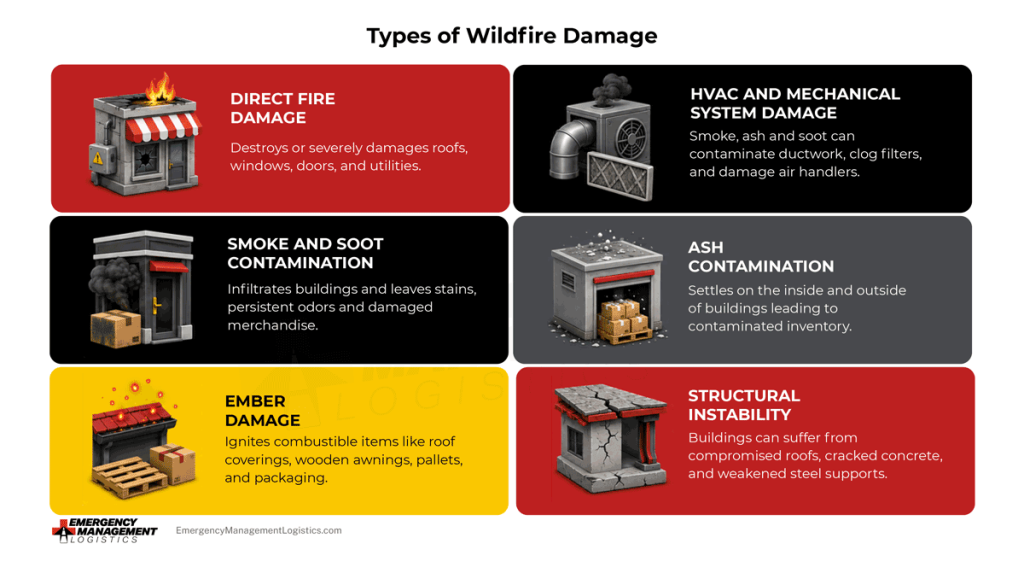
A property loss by a wildfire can destroy inventory and prevent retailers from reopening their businesses.
Wildfires cause road closures, freight rerouting, and reduced trucking capacity, all of which disrupt shipping and logistics operations.
Highways, state roads, and local routes near wildfires are typically closed to protect motorists and allow emergency responders safe access. However, this also prevents carriers from transporting loads down more direct routes. Carriers have to reroute around closed roads, which adds significant distance and transit time to their shipments.
The shipping delays caused by wildfires ripple through the supply chain, leading to disruptions. Suppliers have to suspend their operations because of facility damage, evacuation orders, and power outages.
Warehouses and distribution centers located near wildfires face the same risks. As transportation slows and facilities shut down, inventory declines sharply.
This leads to:
Supply chain disruptions caused by the fire make it difficult for retailers to reopen and serve their customers.
Wildfires affect utilities and communications when they destroy critical infrastructure, which leads to precautionary shutoffs and disrupted communication networks. This affects almost every part of a retailer’s day-to-day operations, from basic functions to specialty logistics.
Impacted processes and systems can include:
Communication outages caused by wildfires also make it difficult for retailers to coordinate their recovery efforts, which slows down their ability to reopen their stores and warehouses.
Labor shortages are often an outcome of wildfires. Retail workers and employees in other parts of the supply chain often evacuate to safety when there’s a wildfire nearby. Worker evacuation leads to shortages in truck drivers, factory employees, and warehouse personnel.
Depending on the severity of structural issues to building, power outages, and road closures, it may take time before workers return or can be replaced.
Recovery should start immediately after the disaster. During recovery, use the following steps to get your operations up and running:
We’ll discuss each step so you know exactly what to do.
Once authorities have confirmed that it’s safe to return after a fire has passed, retailers should conduct an exterior safety assessment.
This includes checking for:
Next is checking the structural integrity of a store or warehouse to ensure it’s safe to resume operations. Roof sagging, ceiling damage, and warped or cracked walls are all indicators the building isn’t safe and needs repairs.
Check interior conditions, such as:
Finally, retailers need to evaluate the impact to their operational infrastructure. Checking loading docks, warehouse equipment, and refrigeration systems are important, as they allow retailers to perform vital parts of their operations.
After surveying the infrastructure, retailers should prioritize any repairs based on business continuity.
Retailers shouldn’t assume their utilities are working after the fire. Smoke, heat, and power outages can harm mechanical and electrical components that keep warehouses and stores from reopening.
Utilities that should be inspected include:
Recovery teams should stay in contact with utility providers so they can coordinate any repairs that are needed.
Retailers need to test their technology and security systems before reopening. Retail technology helps businesses perform their day-to-day tasks, while security systems keep stores and warehouses secure.
Systems to test include:
Without these systems functioning, retailers can’t receive freight, process sales, manage their inventory, or keep their buildings secure.
Documenting damage and inventory losses is essential for retailers before they start cleaning up their store or warehouse. It allows them to apply for disaster assistance programs, guides repair planning, tracks business interruption losses, and creates a record for contractors and restoration teams.
Records can be kept in the following documentation formats:
Be sure to keep your documentation records in a secure location so they don’t become lost. You may need to refer back to them in the future.
As counterintuitive as it may seem, floods and mudslides are common hazards after a wildfire. They destroy vegetation that helps catch rainfall and stabilize soil. Organic materials on the ground that absorb rainwater also burn in a fire.
According to the Federal Emergency Management Agency (FEMA), even areas that aren’t normally at risk of floods and mudslides become vulnerable to flooding and mudslides following the fire.
Retailers can assess their risk for floods and mudslides with a few simple steps:
Following these steps helps retailers take the necessary precautions to protect themselves. This includes elevating critical equipment and installing flood barriers.
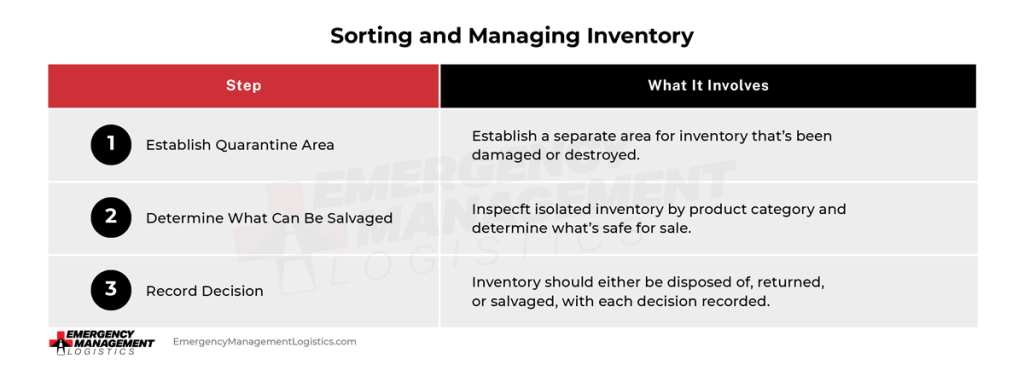
After a fire occurs, you’ll have to sort through your inventory to determine what goods can still be sold and what must be discarded. The following table outlines the process you can use to make managing your inventory easier.
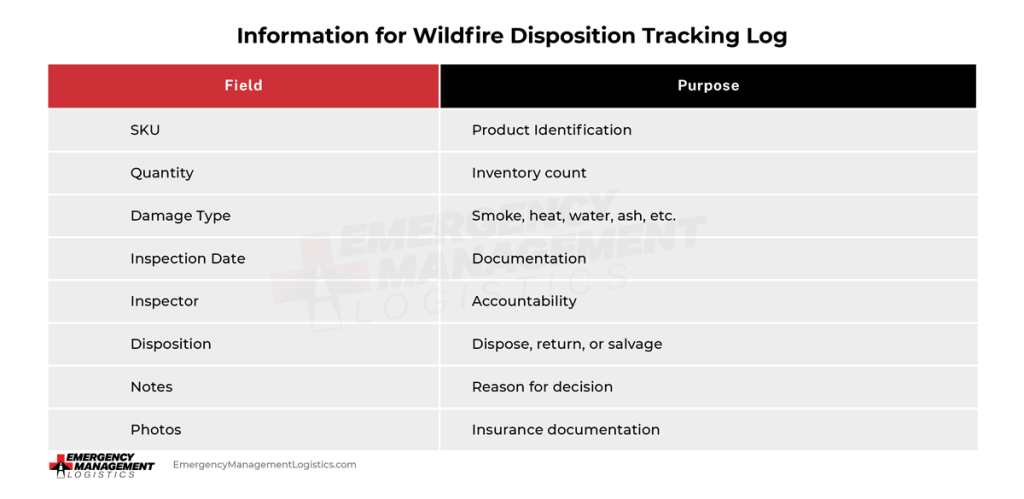
Businesses must track each quarantine item using a disposition log. This will help them improve inventory control and support insurance claims.
Sorting through and managing your inventory in the aftermath of a wildfire helps you determine the types of and quantities of products you’ll need to replace.
Retailers can restore their supply chains by contacting suppliers, prioritizing vital inventory, creating alternative delivery routes, and using temporary storage and fulfillment options.
Start contacting the organizations and businesses that keep your supply chain moving.
This includes:
Retailers will need to resort to contingency plans, substitute products, or utilize secondary manufacturers if their suppliers are affected by a wildfire. If their suppliers are unaffected, they’ll need to organize shipments of replacement stock.
Next, recovery teams should start contacting the trucking companies, third-party logistics (3PL) providers, and freight brokers they partner with. They’ll need to discuss the logistics concerns facing their shipments.
This includes:
Finally, retailers have to contact their distribution centers and warehouses in areas affected by a wildfire. Retailers will have to assess their operating status, inventory availability, and labor shortages.
Restocking the inventory you’ve lost is an important part of getting your supply chain moving. However, your restocking strategy should focus on the most important and sought-after goods. Here’s the order you should restock your inventory.
Prioritizing inventory in this order will help retailers restore their operations more efficiently, while also serving the needs of their community they operate in.
Roads and highways can be closed for an extended period following a wildfire, which makes identifying backup delivery routes essential. Here are some methods you can use to identify alternate routes for your shipments.
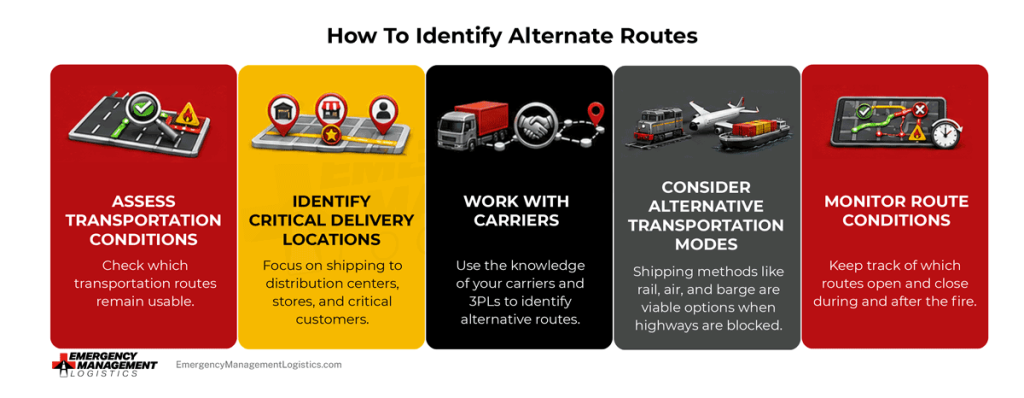
While alternate routes can extend transit times, they’re essential if you want to get your shipments moving after a wildfire.
Retailers with damaged or destroyed warehouses will need alternative storage space for goods that survived the wildfire and shipments of new products. One option retailers use is sending their goods to nearby warehouses they own. However, this can cause warehouses to become overcrowded and run out of space.
Retailers can find the warehouse space they need with 3PLs. These companies typically operate a nationwide network across the country. This gives retailers the flexibility needed to store and fulfill their orders.
Retailers should coordinate transportation during wildfire recovery by verifying routes and site access, protecting drivers and delivery personnel, and scheduling deliveries around their recovery efforts.
Retailers typically have shipments already in transit when a wildfire strikes. In addition to managing freight that’s already moving, they’ll have to organize new shipments as well. This makes careful shipment coordination all the more important.
Once you’ve identified alternate routes and the delivery location of your shipments, be sure to check each one final time before shipping your freight. A route that was open in the morning could become closed due to firefighting operations, utility repairs, or debris removal later in the day.
Checking one final time helps ensure your shipment avoids unexpected delays.
While retailers can’t protect carriers from all the dangers they’ll face on the road during a wildfire, they can foster a safe environment for drivers and delivery personnel to park, unload, and wait. Keep loading and waiting areas clear of debris, destroyed utilities, and unstable structures.
Retailers can also provide drivers leaving their warehouses or stores with safety information and updates about road closures.
Wildfire recovery efforts at a warehouse or store can create access restrictions that delay delivery and shipping. Businesses can coordinate their delivery schedules around recovery operations to ensure a smooth flow of goods.
Before dispatching a load, retailers should confirm the following:
Taking these factors into consideration allows you to continue your recovery efforts while also shipping and receiving freight shipments from your facility.
Temporary warehousing helps retailers recover from a wildfire by providing an interim location to receive, store, and distribute inventory while damaged facilities are repaired.
The benefits of using temporary warehousing include:
Temporary warehousing allows retailers to bridge the gap between disaster response and full operational recovery.
Emergency logistics providers are a valuable resource for retailers whose transportation, warehousing, and distribution operations have been disrupted by a wildfire.
Emergency logistics providers can be useful when:
Emergency logistics partners help retailers fill gaps in their supply chain until normal shipping and warehousing operations resume.
Has a wildfire affected your retail business? Emergency Management Logistics is here to help. We use a network of carriers to transport essential goods retailers need to keep their supply chain moving. Our strategically located warehouses across the nation offer a secure storage location.
From corporate emergencies to disaster relief, Emergency Management Logistics has you covered. Call us at (855) 420-9447 or contact us to find out how we can help.
Sources:
About the Fire, U.S. Forest Service
Flood Risks Increase After Fires, Federal Emergency Management Agency, 2020
Jenkins, Abby, What Is Stock Replenishment?, Oracle NetSuite, 2022
Public Fire Information Websites, U.S. Forest Service

